


At the 1983 British Open, Nick Faldo scrambled into the lead with 9 holes to go. He finished tied for 8th.
After that heartbreaker, he played pretty well for the rest of the year. But he had reached his limit. He knew his game couldn’t take him where he wanted to go.
So he did the unthinkable: he rebuilt his swing.
Those were tough times. He lost tournaments. He lost sponsors. Some critics thought he was done.
But he kept swinging. And in 1987, he came back and won the Open. He would go on to win six majors in his career.
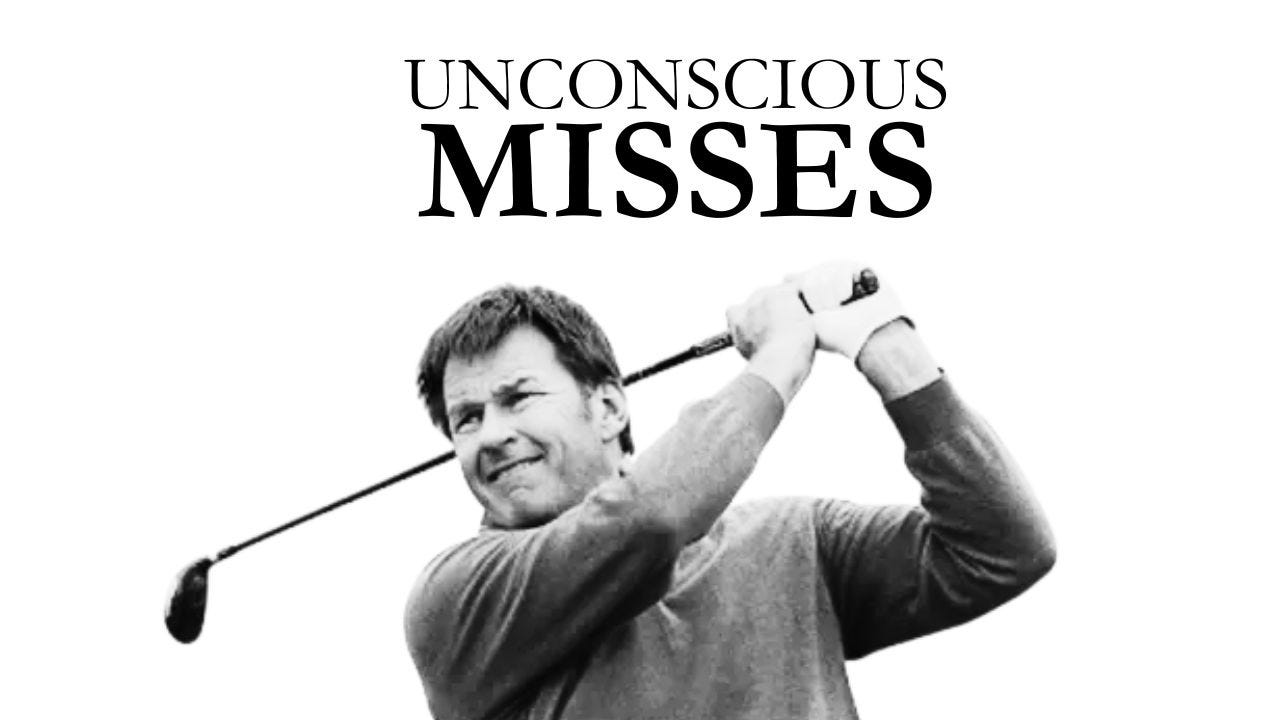
Faldo knows what it’s like to struggle. That’s why he wrote the book. And one of his very first lessons can help all of us.
It’s about unconscious compensation.
“Practicing on a wide-open driving range,” Faldo writes, “it’s easy to lose focus. Before you know it, you’ve hit a bucket without giving any real thought to the quality of your alignment.”
You might be doing everything else right. Picking the target. Visualizing the shot. But when you set up, you only casually align yourself to the target line.
“So your body,” Faldo says, “figures out a way of compensating for the fact that your shoulders are pointing 20 yards right or left.”
You’ve compensated for your bad alignment without even knowing it. As you practice, you’re grooving your swing based on that compensation.
“Then you get out on the golf course,” Faldo says, “and wonder why you’re having trouble hitting a fairway or green.”
You pay more attention on the golf course, so you align yourself correctly. But your body is trained to compensate like you did on the driving range.
Have you ever found yourself hitting every shot 20 yards offline—and you can’t figure out why? For many of us, unconscious compensation is the answer.
Fortunately, once someone like Faldo makes you aware of it, it’s easy to fix.
He says, “Make alignment your first priority as you set up.”
Align the clubhead with the target line. Step in and align your body to the clubhead. Then check your stance and shoulders.
It’s that simple.
Financial guru Suze Orman said, “In order to live a rich life, everything about who you are must be in alignment.”
That’s true of your golf game as well.
Make alignment your first priority. Replace unconscious compensation with conscious targeting. It’s amazing how many more fairways and greens we can hit in life when our aim is true.
Thanks for listening. If you like what you hear, tell a friend. Imagine Golf is designed to help you improve your mental game in less than 5 minutes a day. Think better, play better.
That’s all for today. Until next time, keep imagining what’s possible.


